

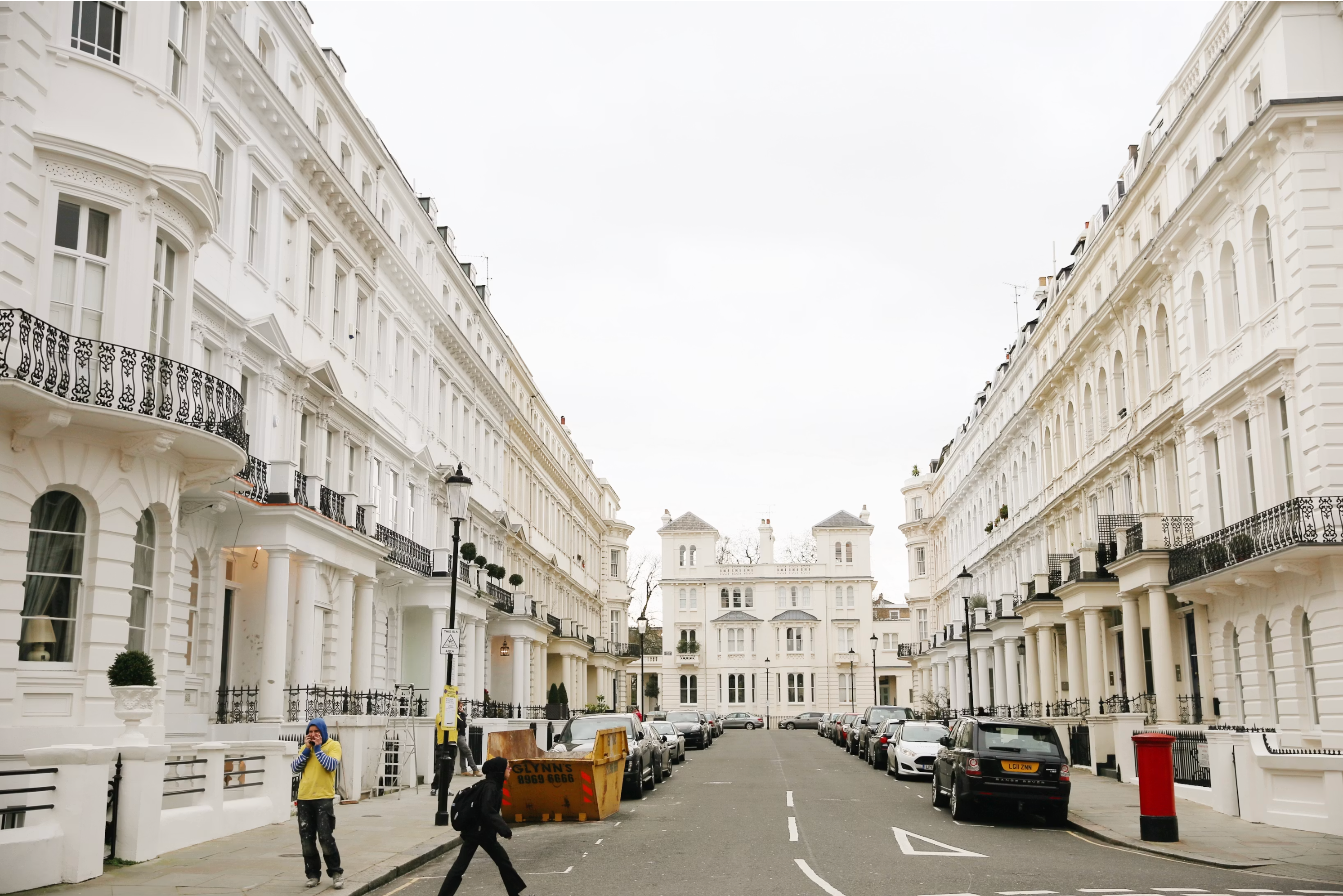
The Most Beautiful Architecture in Kensington & Notting Hill
Ask most people what comes to mind when they think of Kensington and Notting Hill, and you'll probably hear about colourful houses, leafy streets, and that famous blue door from Notting Hill.
But slow down for a minute and look up. These two neighbourhoods are quietly packed with some of the best architecture in London, telling the story of the city's history one building at a time.
Walk from a medieval church to a Gothic masterpiece, then on to a row of elegant Georgian townhouses and the white stucco terraces Notting Hill is famous for, and no two streets ever quite look the same.
The best part? If you're staying nearby at Pocket Apartments, you don't need a ticket or a tour guide to see any of it. Just step outside and start walking.
The Medieval Origins
Kensington might look thoroughly Victorian at first glance, but its history goes back much further than that.
St Mary Abbots Church
Tucked right on Kensington High Street, St Mary Abbots has stood as a place of worship since the 12th century. The building you see today is largely Victorian, but its soaring spire and Gothic Revival details still nod back to the medieval churches that inspired those 19th-century architects.
It's easy to walk right past it while dashing between shops and museums, but it's genuinely one of the first things worth pausing for.
Why Kensington Became a Victorian Showpiece
Most of Kensington's character comes from its Victorian boom years. As London grew through the 19th century, wealthier residents began moving west, and what had once been semi-rural land turned into one of the city's most sought-after addresses.
That shift gave us grand terraces, ornate facades, and some seriously impressive brickwork, much of it still beautifully preserved around South Kensington and Kensington Gardens today.
The Gothic Masterpiece That Changed London
The Natural History Museum
Even people who couldn't care less about architecture stop in their tracks for this one. Finished in 1881, it looks like something between a cathedral, a castle, and a fairytale palace.
Architect Alfred Waterhouse chose terracotta over stone, partly to help the building stand up to London's pollution, and if you look closely you'll spot animals carved into almost every surface. Plenty of visitors come for the dinosaurs and end up talking about the building on the way out.
It's especially striking in autumn and winter, when that dramatic exterior sits against a grey London sky.
The Grand White Terraces of Notting Hill
Where Kensington feels like Victorian ambition, Notting Hill has its own thing going on entirely.
Its iconic white stucco terraces went up mostly in the early to mid-19th century, drawing on classical Greek and Roman architecture. Think symmetrical facades, decorative columns, arched entrances, cast-iron balconies, and generous sash windows.
On a sunny day, it doesn't feel much like London at all. It feels a bit like Paris.
The Colourful Houses Everyone Photographs
Here's a fun fact: those bright, pastel-coloured houses everyone photographs weren't part of the original plan. They were painted much later, and that's really what turned Notting Hill into one of the most Instagrammed corners of the city.
It's the mix of classical bones and playful colour that gives the area its look. If you want the best photos, put your phone's map away for an hour and just wander. The nicest streets are usually the ones you stumble onto by accident.
Kensington's Hidden Mews Streets
Some of the area's best architecture is easy to miss entirely.
The mews were originally stables and carriage houses built for wealthy families, tucked away behind the grand terraces. Over the years they've been converted into charming little homes, and today they feel like a completely different side of London.
Cobbled lanes, converted coach houses, ivy climbing up the walls, colourful front doors. It feels more like a village than central London, and a lot of visitors never find them at all.
The Unexpected Art Deco Gems
Victorian architecture might dominate the skyline here, but keep an eye out and you'll spot pockets of early 20th-century design too. Art Deco apartment buildings started appearing between the wars, bringing cleaner lines and a more geometric, modern feel.
Spotting the contrast between Victorian ornament and Art Deco simplicity is a nice little treasure hunt if you're into that kind of thing.
The Royal Influence
You can't really talk about this area's architecture without mentioning Kensington Palace. Built in the 17th century, it helped turn Kensington into one of London's most prestigious places to live, and a lot of the surrounding development was built to attract residents who wanted to live close to royal life.
That legacy is still visible today in the wide streets, elegant garden squares, and grand facades throughout the neighbourhood.
The Architecture You Experience After Dark
Evening might be the most underrated time to explore Kensington and Notting Hill. As the light fades, church spires turn into silhouettes, the white terraces glow under the street lamps, and the mews streets take on an almost cinematic quality.
It's not hard to see why filmmakers keep coming back to these streets.
A Self-Guided Architecture Walk From Pocket Apartments
Staying with Pocket Apartments means most of this is within easy walking distance. A good afternoon route might look like:
- Morning coffee in Kensington
- A stop at St Mary Abbots Church
- A wander through the grand Victorian streets around South Kensington
- A visit to the Natural History Museum
- A walk through Kensington Gardens
- A detour into the hidden mews streets
- A stroll through Notting Hill's white terraces
- Dinner at a local neighbourhood restaurant
No guide required. Just comfortable shoes and a bit of curiosity.
See London's History Without Setting Foot in a Museum
Kensington and Notting Hill get plenty of attention for their museums and shopping, but honestly, the streets themselves might be the real attraction.
Not many places let you walk through medieval origins, Georgian elegance, Victorian ambition, and Art Deco innovation, all in a single afternoon.
For guests staying at Pocket Apartments, it's one of the easiest and most rewarding ways to get to know the neighbourhood. Some of London's best history isn't behind glass. It's right outside your front door.



Share:
Alternatives to Traditional Hotels in Kensington: A Smarter Way to Stay in West London
The Best Bakeries & Pastry Spots in Notting Hill and Kensington